
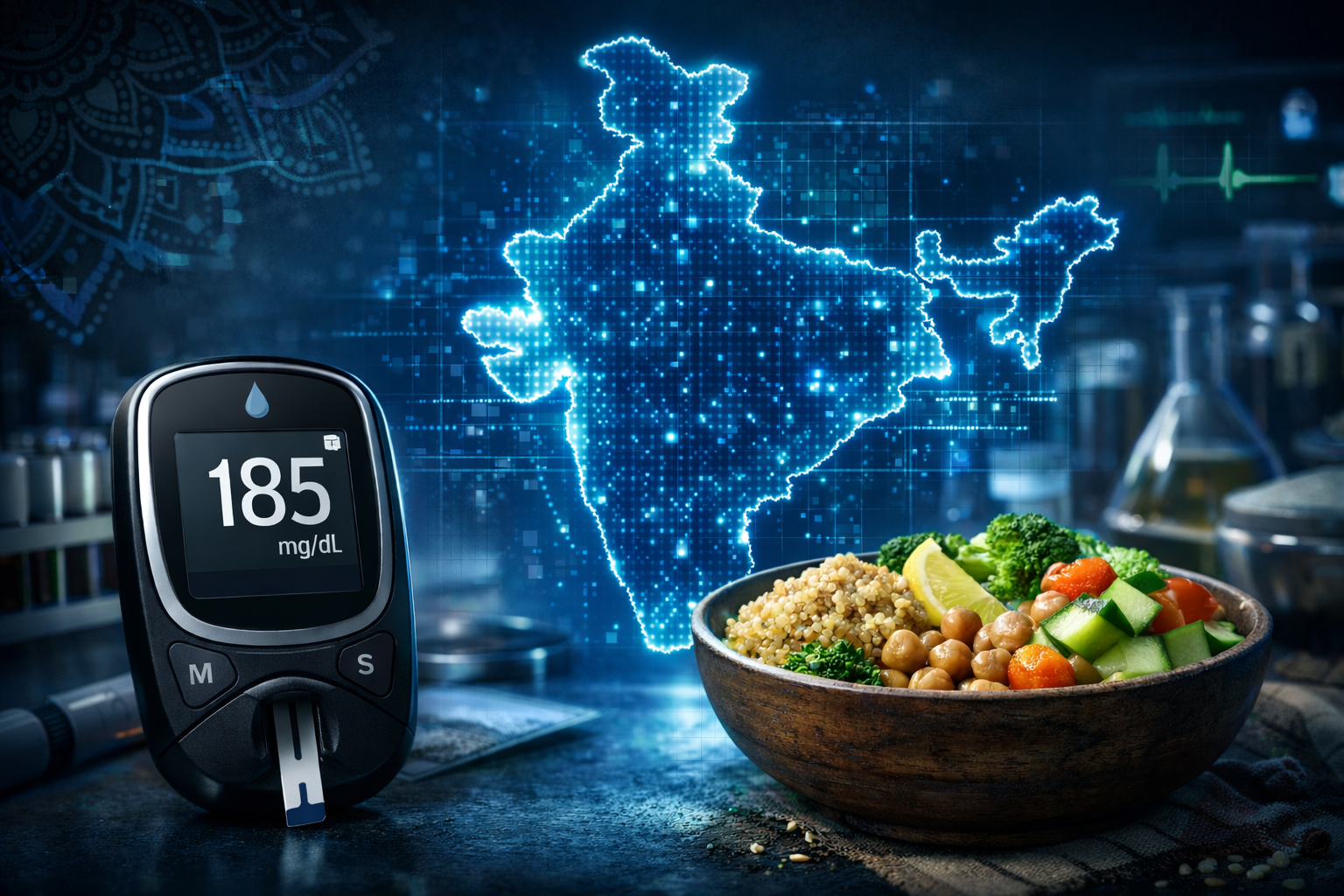
India faces a metabolic crisis with rising diabetes, fatty liver, and heart disease. It Explained that insulin resistance, often hidden for years, drives these issues. To fix this, prioritize protein, control carbohydrates, and maintain active lifestyles.
India is currently facing a massive, invisible health crisis. We are often called the “Diabetes Capital of the World,” with staggering statistics to back it up: 101 million diagnosed diabetics and another 136 million diagnosed as pre-diabetic. In India alone, as many as 69 million people are living with what scientists are now calling “Type 3 Diabetes” (neurodegenerative diseases). Furthermore, cardiovascular diseases account for 27% of all deaths in the country, and we are seeing heart attacks occur a decade earlier in Indians compared to international averages—the average age for a heart attack here is just 53,.
If nothing changes, studies predict that by 2050, India will have 450 million obese people. We are facing an epidemic where one in three Indians has a fatty liver, and in sectors like IT, that number jumps to nearly 80%,. We are also seeing a rise in reproductive issues, with 27.5 million couples struggling with fertility.
These are not just six or seven separate diseases; they are a cluster of problems known as Metabolic Dysfunction. If you have one, there is a strong chance you will develop others. The common denominator linking all these issues—from heart disease to infertility—is Insulin Resistance,.
Understanding Insulin Resistance: The Root Cause
To understand why we are getting sick, we must understand insulin. Insulin is not just a medication for diabetics; it is a hormone produced by the pancreas. Its job is to manage the glucose (sugar) in our blood.
The body works hard to keep blood sugar in a very narrow range because high blood sugar is toxic, while very low blood sugar can lead to seizures or comas. When we eat carbohydrates, they convert to glucose. The pancreas detects this rise and releases insulin. Think of insulin like a “bouncer”: it knocks on the doors of your muscle tissues and fat cells, telling them to open up and consume the excess glucose for energy or storage.
Normally, insulin levels should drop back down after doing this job. However, in our modern lifestyle, insulin remains chronically elevated.
The Cycle of Hyperinsulinemia:
Consider the average Indian diet. We start the day with a high-carb breakfast like Poha, Idli, Dosa, Parathas, or cereals—foods that are nearly 70% carbohydrates. This spikes glucose, and insulin rises. A healthy person’s glucose might normalize in two hours, but insulin stays elevated longer to ensure the job is done. By mid-morning (11:00 AM), we have tea with sugar, biscuits, or rusks—another glucose spike. At lunch, we eat Roti, Rice, and Dal—more carbs. Evening snacks involve fried foods or more carbs, and dinner repeats the cycle.
Because we are constantly feeding ourselves glucose, insulin never gets a chance to come down. This state of chronically elevated insulin is called Hyperinsulinemia. Over time—often 5 to 10 years—your cells become “deaf” to the bouncer’s knock. They refuse to accept more energy because they are full. To compensate, the pancreas works overtime, pumping out 2, 3, or 4 times more insulin just to keep blood sugar normal. This is Insulin Resistance,.
The Diagnostic Trap
The tragedy is that 90% of people with insulin resistance do not know they have it. This is because our medical system focuses on “late-stage” markers. We obsess over Fasting Glucose and HbA1c during annual checkups. These numbers only become abnormal after your pancreas has exhausted itself and beta-cells have started to dysfunction—a process that takes 10 to 15 years,.
For a decade, your standard blood tests will say you are “normal” because your high insulin is successfully masking the problem. By the time your blood sugar rises and a doctor diagnoses you with Pre-diabetes or Diabetes, you have actually been sick for years.
The Right Test: Instead of just checking glucose, you must check Fasting Insulin. It is an affordable test (often under ₹500).
Read More :
STOP Damaging Your Body: A Complete Guide to Sleep, Fitness, and Yoga.

I'm a education-driven content creator dedicated to breaking down complex ideas into simple, practical, and easy-to-understand explanations. The website is built with a clear mission: to promote learning, awareness, and education.