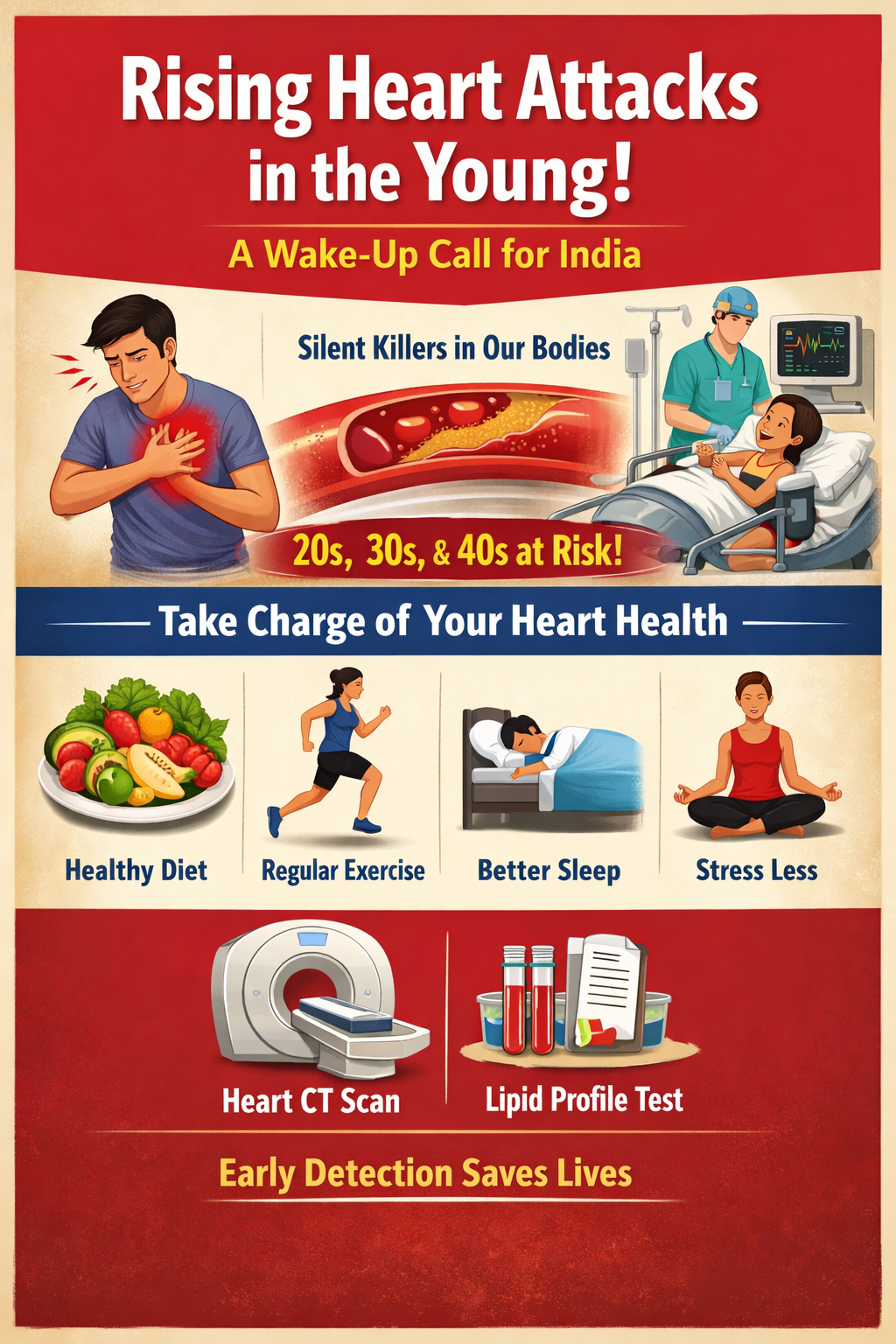
Medical experts highlight that lifestyle changes are vital to preventing heart attacks, which are rising among youth. Key factors include diet, exercise, sleep, and stress management. Early screening via CT scans or lipid profiles is essential to detect silent blocks.
We are living in a time where the rules of heart health have fundamentally changed. Thirty or forty years ago, heart disease was considered a condition of the elderly—something we might worry about in our 60s or 70s. Back then, it was rare to see a heart attack patient under the age of 30. Today, however, the reality is terrifyingly different. We are witnessing people in their 20s, 30s, and 40s suffering from massive heart attacks. I have seen 22-year-olds requiring bypass surgeries and college students collapsing from cardiac arrest.
Why has this happened? Why has India become the capital of heart disease when our ancestors seemed immune? In this article, I will break down exactly what has gone wrong, the silent killers lurking in our bodies, and the precise steps—from diet to sleep—that we must take to reverse this trend.
The New Reality: It’s Not Just “Bad Luck”
We often hear about a celebrity or a fitness enthusiast dropping dead and think, “It must be fate.” But the truth is, heart disease is rarely sudden. It is a process that builds up over 10 to 20 years. The blockage in your arteries starts forming in your late teens or early 20s. By the time you feel chest pain or breathlessness, the blockage is likely already over 70% or 80%.
The primary reason for this explosion in cases among the young is a complete overhaul of our lifestyle. We have stopped moving, our diet has become processed, our sleep cycles are broken, and our stress levels are through the roof. We have moved from physically active lives to sedentary ones, glued to screens, thinking that an occasional workout makes up for 12 hours of sitting.
The Root Causes: The “Silent Killers”
Heart disease is multifactorial—it usually stems from a combination of 14 key risk factors. However, the most dangerous ones are often “silent” because they show no symptoms until the damage is done.
Diabetes and High Blood Pressure (The Silent Destroyers): We call these “silent killers” because they damage the body from the inside for 10-15 years without you feeling a thing. High blood sugar acts like a slow poison, damaging the inner lining of your blood vessels (the endothelium), making them sticky and prone to plaque buildup. If you are diabetic, your risk of a silent heart attack (one with no pain) is significantly higher due to nerve damage.
High Cholesterol and Triglycerides: There is a major misconception that if you are thin, your cholesterol is fine. This is false. I have seen thin patients with massive blockages because of genetics or poor diet. Specifically, Triglycerides (fat in the blood) and LDL (bad cholesterol) are the enemies. Triglycerides come largely from the oils we eat and the sugars we consume.
Stress: Chronic stress is not just a mental state; it is a physical poison. It releases hormones like adrenaline and cortisol, which constrict your arteries and damage that protective inner lining. Severe emotional shock can even cause “Broken Heart Syndrome,” where the heart muscle is temporarily stunned and weakened.
Genetics: If your father or grandfather had heart disease, your risk is high. If they had it before age 60, you are likely to develop it 10 years earlier than they did. However, genetics is not a death sentence. With strict lifestyle control, we can delay or even prevent the onset of disease.
Recognizing the Warning Signs
Unfortunately, 20% to 30% of people do not experience the classic “Hollywood heart attack” symptoms like crushing chest pain radiating to the left arm. You must be vigilant for atypical signs:
Gas or Acidity: Many people mistake heart pain for “gas” or indigestion. If the “burning” sensation in your chest or stomach increases when you walk and settles when you rest, it is not gas—it is your heart crying for help.
Fatigue: Feeling exhausted after small tasks, like climbing one flight of stairs, is a major red flag.
Jaw or Tooth Pain: Pain radiating to the jaw or tooth can be a referred pain from the heart.
Women are Different: Women often present with subtler symptoms and are frequently misdiagnosed or treated less aggressively than men. Post-menopause, a woman’s risk equals that of a man as the protective effect of hormones fades.
The Diagnostic Trap: Why Your ECG Might Be Lying
This is one of the most critical pieces of information I can give you: An ECG can be normal even if you have a 90% blockage. An ECG only captures the heart’s electrical activity at rest. If you are sitting still, your heart only needs minimal blood flow, so the blockage doesn’t show up.
So, what tests should you actually get?
CT Coronary Calcium Score: This is a quick, non-invasive scan that detects calcium deposits in your arteries. It is a fantastic screening tool for people over 35 or 40.
Stress Test (TMT) or Stress Echo: By making the heart run fast (either on a treadmill or via medication), we can see if the blood flow is sufficient under load. This picks up what an ECG misses.
CT Angiography: For a detailed view without the invasive wire, a CT Angio (taking just 5 minutes) can show exactly where and how much blockage exists.
Advanced Lipid Profile: Don’t just check “Total Cholesterol.” Look for Lipoprotein(a) and Apo-B, which are genetic markers for high risk.
The Truth About Diet: Oil, Sugar, and “Natural” Eating
Our diet has shifted from farm-fresh to factory-processed. To save our hearts, we must return to basics.
The Oil Controversy: There is a massive debate about oil. Dr. Bimal Chhajer advocates for Zero Oil Cooking, arguing that all oil is essentially triglyceride (fat) and that we can cook perfectly tasty food using water and spices. On the other hand, other experts suggest using oils with a high smoking point like peanut, sunflower, or rice bran oil for Indian cooking, but in very limited quantities (max 25-30ml per day). The consensus? Less is definitely more. And never reuse oil.
Sugar is the New Tobacco: Sugar is as dangerous as tobacco for the heart. It spikes insulin, leads to inflammation in the arteries, and converts directly into triglycerides. We consume more sugar in a day now than our ancestors did in a month. If you want to protect your heart, cut out sweets and refined sugar entirely.
Veg vs. Non-Veg: Vegetarians generally have a lower risk of heart disease, but only if they aren’t consuming processed junk. Animal products contain cholesterol; plants do not. If you eat non-veg, stick to fish (rich in Omega-3) or egg whites. Red meat and egg yolks are high in cholesterol and saturated fats.
The “Magic” Foods:
Coloured Fruits & Vegetables: High in antioxidants which “clean” the system.
Nuts: Walnuts and almonds (soaked) provide healthy fats, but limit them to a handful a day.
Flax & Chia Seeds: Excellent sources of Omega-3 for vegetarians.
Lifestyle: Sleep and Exercise
The 10 PM Rule: We have disrupted our circadian rhythm. Our bodies are designed to sleep when it gets dark. Sleeping at 2 AM and waking at 10 AM is not the same as sleeping from 10 PM to 6 AM, even if it is 8 hours. The body repairs itself between 10 PM and 4 AM. Late nights increase stress hormones and blood pressure. We must prioritize 7-8 hours of sleep, ideally starting before 11 PM.
Exercise: It’s Non-Negotiable: “Sitting is the new smoking.” If you sit for an hour, you are doing damage equivalent to smoking.
How much? Minimum 30-45 minutes of brisk walking every day. You should walk fast enough that you cannot sing or chat easily on the phone (the “talk test”).
What kind? A mix of cardio (for heart fitness) and resistance/weight training (to build muscle and improve metabolism) is best.
Warning for Gym Goers: Do not blindly take supplements or anabolic steroids. Steroids can thicken the heart walls and lead to heart failure. Also, avoid extreme “High Intensity” workouts if you are unconditioned; build up slowly.
Treatment and Reversal: It’s Never Too Late
If you are diagnosed with a blockage, do not panic.
Reversal is Possible: With drastic lifestyle changes (strict diet, exercise, stress management), we can actually reverse soft plaque and increase the diameter of the arteries.
Medical Management: Drugs like Statins (to lower cholesterol) and Aspirin (blood thinner) are life-savers for high-risk patients. They stabilize plaque and prevent clots.
EECP (Natural Bypass): For those who cannot or do not want surgery, therapies like Enhanced External Counter Pulsation (EECP) can help grow “collateral” arteries—natural bypasses that your body creates.
Surgery: Angioplasty (stents) and Bypass surgery are necessary in critical cases, but they are not a “cure.” If you don’t change your lifestyle after surgery, the blockages will return.
Summary: Your Action Plan
If I had to summarize the path to a bulletproof heart, it would be this:
Check your numbers: Know your BP, Sugar, and Lipid Profile (including Triglycerides). Get a CT Calcium score if you are over 40.
Move: Walk for 45 minutes daily. Do not sit for more than an hour at a stretch.
Eat Clean: Minimize oil, eliminate sugar, and eat “natural” foods (grown on a farm, not made in a factory).
Sleep: Go to bed by 10:30 PM.
Manage Stress: Practice Yoga or “Yoga Nidra.” Even 30 minutes can lower your blood pressure significantly.
We cannot change our genetics, but we can change everything else. Every heartbeat matters—let’s protect them.
Read more:
The Truth About Cancer: Lifestyle Triggers, Common Myths, and the Power of Early Detection

I'm a education-driven content creator dedicated to breaking down complex ideas into simple, practical, and easy-to-understand explanations. The website is built with a clear mission: to promote learning, awareness, and education.