
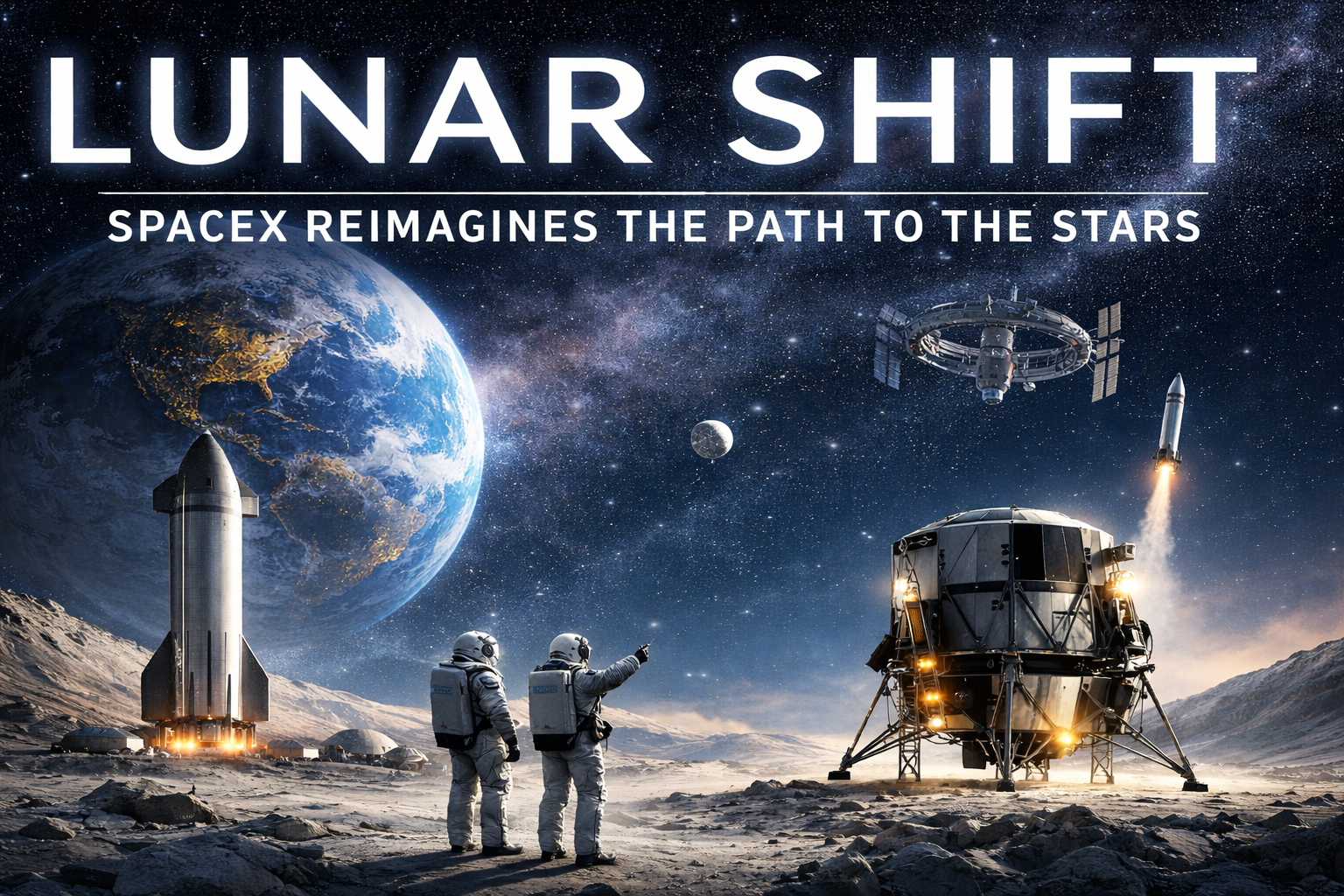
Elon Musk and SpaceX are shifting priority from Mars to the Moon, aiming to build a self-growing city within a decade. The Moon offers shorter travel times and frequent launch windows. This pivot aligns with NASA’s Artemis program and serves as a testing ground for future missions.
For years, we have watched Elon Musk obsessed with one singular idea: sending humans to Mars, establishing a settlement there, and turning humanity into a multi-planetary species. That has been his long-term mission. But now, I can report that he is changing course. Elon Musk is no longer making Mars his top priority; instead, he is turning his attention to the Moon.
The New Objective: A Lunar City
SpaceX is shifting its focus to building what Musk calls a “self-growing city” on the lunar surface. He believes that we can potentially achieve this readiness in less than 10 years. In contrast, achieving a similar feat on Mars would take more than 20 years.
It is important to clarify that this is not a complete abandonment of Mars. Rather, Mars has been pushed back in priorities because the Moon is simply easier to reach, test on, and build infrastructure upon.
The Logistics: Why the Moon Wins
When we look at the logistics, the problem with Mars becomes clear. Trips to the Red Planet depend entirely on planetary alignment. The launch window opens only once every 26 months, the journey takes months to complete, and every mission is expensive and risky.
The Moon presents a completely different scenario. We can launch missions roughly every 10 days, and the trip takes just two days. This proximity allows us to fail and learn faster, and to keep building without the long delays associated with Mars travel.
Building the City
So, what is a “self-growing city”? While Musk has not shared a specific blueprint, the idea is straightforward: we send robots first. These robots will build small habitats and keep expanding the settlement by using local resources where possible. Over time, a permanent settlement takes shape.
Political and Strategic Momentum
SpaceX is already deeply involved in making this a reality. The company holds a multi-billion dollar contract under NASA’s Artemis program, and its Starship rocket is intended to land astronauts on the Moon.
This pivot also aligns with significant political momentum. President Donald Trump has pushed for humans to return to the lunar surface—a place no human has walked on since 1972. This political backing has brought fresh urgency to moon missions, aiming to establish an enduring presence to understand and realize the scientific, economic, and national security value of the lunar surface before global rivals do.
The Evolution of Musk’s Empire
I also see this shift reflected in the evolution of Musk’s broader empire. Most of SpaceX’s revenue now comes from commercial launches and its Starlink business, rather than just NASA contracts. Simultaneously, Musk is blending his ventures in new ways. Tesla is pouring billions into robots and autonomous systems, and SpaceX has acquired his AI company, xAI. The long-term vision even includes space-based data centers.
Ultimately, the mission of SpaceX remains the same: to extend consciousness and life as we know it to the stars. Mars is still the ultimate ambition, but the Moon is becoming the necessary next step—a testing ground, a base, and a launchpad for what comes next. Timelines may change, as space is unpredictable, but it is clear that the race to live beyond Earth will likely begin with the Moon.
Read More:
The Mystery of the Vanishing Ozone: How We Saved the World

I'm a education-driven content creator dedicated to breaking down complex ideas into simple, practical, and easy-to-understand explanations. The website is built with a clear mission: to promote learning, awareness, and education.