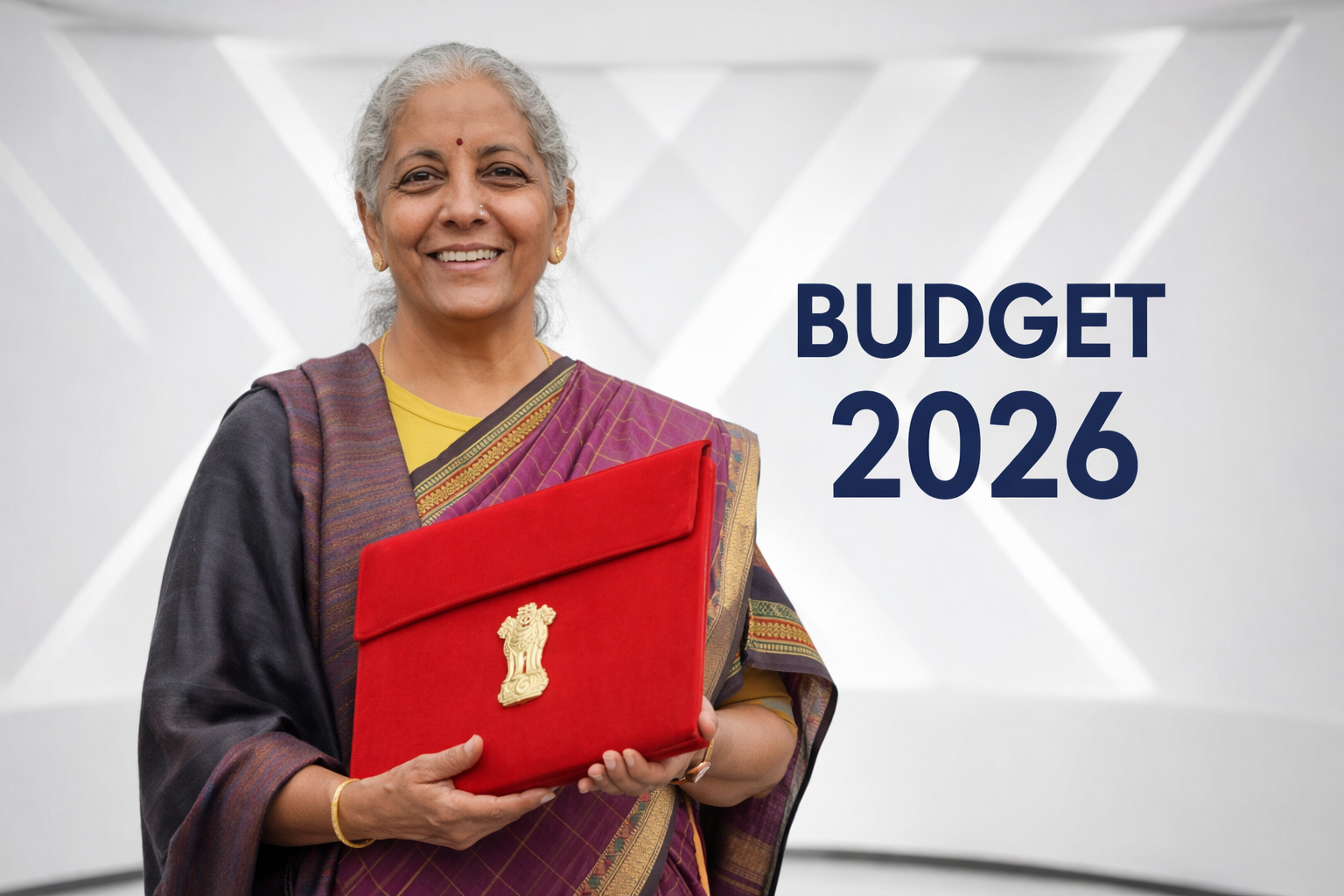
The Budget 2026 shifts focus toward long-term capital expenditure and infrastructure over short-term relief. Key priorities include textiles, tourism, and special corridors for South India. While aiming for economic growth, critics highlight high tax burdens and debt.
It was February 1st, 2026. I sat down to watch Finance Minister Nirmala Sitharaman present her ninth consecutive budget. She delivered a speech that lasted about one hour and 25 minutes.
While she spoke about discipline and growth, chaos was unfolding elsewhere. As the budget details came out, I watched the stock market bleed. The Sensex crashed by 1,500 to 2,000 points, and the Nifty fell by 650 points. Gold and silver prices also took a nose-dive immediately after the announcements
Examining the 2026 Budget
My expectation for this year’s budget was zero. The middle class got nothing, only talk of increasing taxes. The stock market is down by 1000 points, which often happens after a budget. However, this budget was different from previous ones. It did not focus on “freebies” or tax reductions. Instead, the focus was on Capital Expenditure—plans designed to benefit the country in the long term
Part 1 – Understanding the Budget (The Family Example)
To understand the budget, think of a joint family. The father is in charge, and the mother handles the expenses. Everyone gives their salary to the mother. Then, they discuss expenses: the younger brother wants a trip to Manali, the older brother has a wedding, but the father points out the roof is leaking. The mother decides the priorities—what is urgent and what can wait.
A country is just like a big family. Citizens contribute taxes, and the government must decide priorities because money is not unlimited.
There are three types of budgets:
1. Surplus Budget: Income is higher than expenses.
2. Balanced Budget: Income equals expenses.
3. Deficit Budget: Expenses are higher than income.
India usually runs a deficit budget because the government has to spend on welfare projects rather than just making a profit. To cover the extra expenses, the government borrows money, which becomes National Debt
Part 2: How the Budget is Made
The financial year runs from April 1st to March 31st. Since we cannot predict the future perfectly, the budget is an estimate based on data.
• September: Data collection begins. Ministries are asked about their upcoming expenses.
• January: The “Halwa Ceremony” takes place. After this, officials are “locked in” without phone access to prevent leaks.
• January 29: The Economic Survey is released (showing how the economy is actually doing).
• February 1: The Finance Minister presents the budget
Part 3 : Income and Expenses
If we imagine the country earns ₹1, here is where it comes from:
• Income Tax: 21 paise
• GST/Other taxes: 18 paise
• Corporation Tax: 18 paise
• Borrowing: 24 paise (We borrow because taxes don’t cover all costs).
Where does the money go? (Top Ministries)
1. Ministry of Finance: Gets the most money, mostly to pay interest on loans.
2. Ministry of Defense: Large budget, but much goes to pensions.
3. Roads and Highways: Money for construction, though there is no budget for driver education despite bad driving habits.
4. Railways: Money spent on tracks and signals because ticket sales barely cover running costs.
5. Consumer Affairs/Agriculture: Huge amounts spent on subsidies (like fertilizer) and schemes like PM Kisan, but very little is spent on agricultural research.
6. Science: The Department of Atomic Energy got funding for new power plants. However, ISRO (Space) received only ₹13,000 crore, which is half of what is given to the Department of Posts to cover its losses. This is sad because our space program needs more funds.
Key Reforms and Announcements
• Textiles: To compete with Bangladesh, a National Fiber Scheme and modernization of factories were announced.
• South India: A “Rare Earth Corridor” will be supported in Andhra Pradesh, Odisha, Kerala, and Tamil Nadu. This is crucial for making smartphone and EV batteries and reduces our dependence on imports.
• Infrastructure: Seven high-speed rail corridors are being built (e.g., Mumbai-Pune, Hyderabad-Bengaluru). There is also a focus on developing Tier-2 and Tier-3 cities.
• Tourism: The government plans to develop medical tourism hubs and train 10,000 tourist guides to improve India’s image. Trekking in the Himalayas and turtle nesting sites in the South will be promoted.
• Mental Health: A National Institute of Mental Health and Neuro Sciences (NIMHANS) will be established in North India.
Part 4: Conclusion and Criticism
We must understand the difference between Capital Expenses (one-time spending that creates assets, like building a solar panel) and Revenue Expenses (recurring costs, like paying electricity bills).
My Criticisms:
• Ignoring Problems: The Economic Survey warned about the falling Rupee and the need to boost exports, but the budget didn’t address this enough.
• Foreign Aid: We gave aid to Bangladesh despite them being hostile neighbors recently.
• Education: We are setting up “Content Creation Labs” in schools while school buildings are collapsing and teachers lack skills. This seems like a headline-grabbing move rather than a real solution.
• The Middle Class: Honest taxpayers feel burdened. Tax refunds are stuck, and taxes on stock market trading (STT) were increased. It feels like the system punishes those who are productive and follow the rules, while ignoring those who cheat.
While the Finance Ministry cannot solve every geopolitical problem, issues like Income Tax management are their responsibility, and the middle class is disappointed.
Read More:
| Select The Dark side of Elon Musk | | The Dark side of Elon Musk | |
|---|

I'm a education-driven content creator dedicated to breaking down complex ideas into simple, practical, and easy-to-understand explanations. The website is built with a clear mission: to promote learning, awareness, and education.